
Why is my dog eating grass? In most cases, because it is normal. About eight in ten dogs eat grass or other plants regularly, and most of them are perfectly healthy — they like the taste and texture, they are bored, or it is simply a habit. Only about one in ten dogs looks ill before grazing, and only about a quarter vomit afterwards. But the pattern matters more than the act itself: a dog that suddenly starts gulping grass frantically, vomits repeatedly, or eats grass every day is telling you something different from a dog that nibbles a few blades on a walk. This guide explains the six common reasons, the vomiting myth, and the warning signs that mean a vet visit.
Why is my dog eating grass — the short answer
| Pattern | What it usually means |
|---|---|
| Occasional nibbling on walks, dog bright and eating normally | Normal behaviour — taste, texture, habit |
| Grazing while staring at you, or when left alone in the yard | Boredom or attention-seeking |
| Gulping grass urgently, lip-licking, restless, then vomiting once | Mild nausea — the dog may already have felt queasy |
| Eating grass first thing in the morning, then vomiting yellow foam | Empty stomach — stomach acid pooling overnight (bilious vomiting) |
| Sudden, frantic grass eating, every day, with other symptoms | Needs a vet check — see the red-flag box below |
| Eating grass that was sprayed or fertilised | Dangerous — stop the dog and call your vet |
The numbers behind the calm answer come from a 2008 University of California, Davis survey of about 1,500 dog owners (Sueda et al., Applied Animal Behaviour Science): 79% of dogs ate grass or other plants, only 9% appeared ill before doing it, and only about 22% vomited afterwards. In other words, for the large majority of dogs, grass eating is not a cry for help — it is a normal part of being a dog.
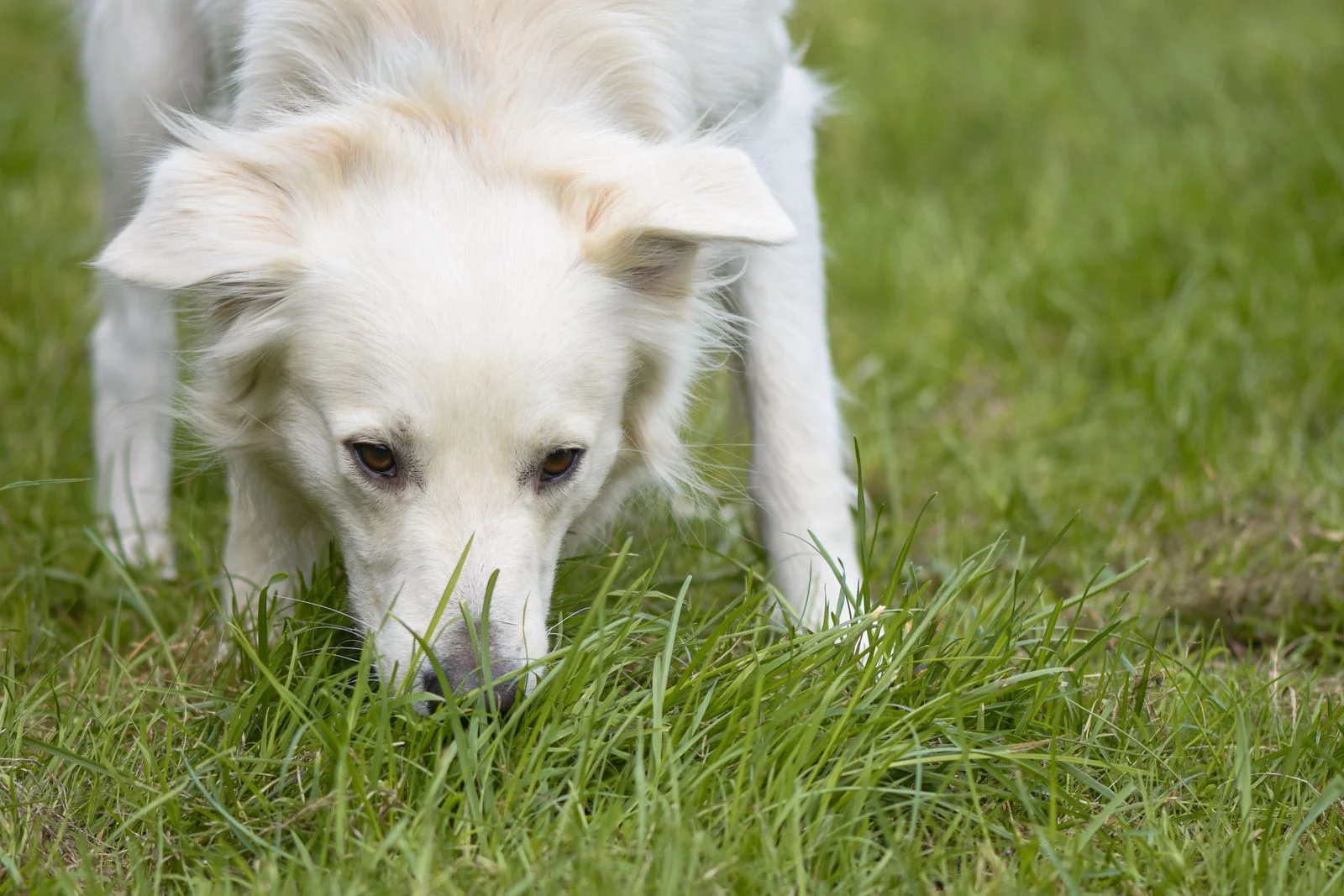
Reason 1: they like the taste and texture
This is the most common reason, and the simplest. Dogs are omnivores who descend from omnivorous wolves, and wolves eat grass, berries and other plant matter regularly — it is not a deviation from carnivory, it is just part of the diet. Many dogs seem to enjoy the fresh, crunchy texture of grass, especially the soft new growth in spring and summer, and they graze the way a person might snack on a salad. A dog that picks a few blades, chews them calmly and carries on with the walk is almost certainly just enjoying itself. There is nothing to fix here.
Reason 2: boredom, habit or attention
Dogs that spend long stretches alone in a yard often graze as a pastime — it is something to do, and it tastes better than staring at a fence. Eating grass while staring directly at you is often a “look what I am doing” behaviour in dogs who have learned that it gets a reaction: you walk over, you say something, you pull them away, and the game is on. And once a dog has grazed a few times without any harm, it can become a plain habit, like sniffing the same lamppost every morning. If boredom is the driver, the fix is not a scolding — it is more play, more walks, puzzle feeders and training games that tire the brain as well as the legs.
Reason 3: mild stomach upset — and the vomiting myth
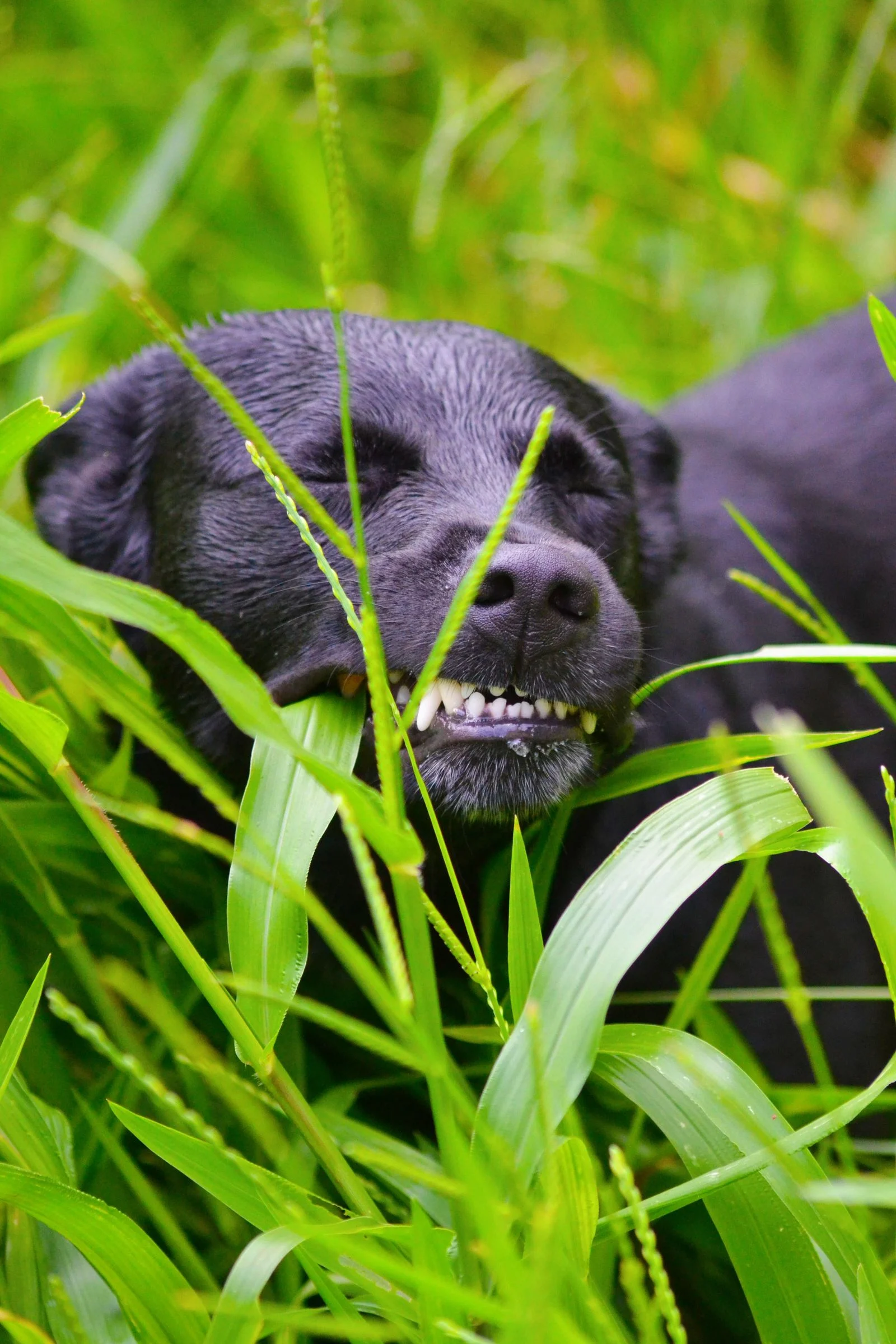
This is the version of the story everyone has heard: dogs eat grass to make themselves vomit. The truth is more nuanced. Some dogs do appear to eat grass when their stomach is bothering them, and a smaller subset vomits afterwards — and in the cases where it does happen, the dog often seems to feel better after. But most grass eating does not lead to vomiting at all, and Dogs Trust states plainly that there is no proof dogs deliberately eat grass to induce vomiting.
The pattern to watch for is the urgent kind: a dog that suddenly starts gulping grass frantically, lip-licking, swallowing repeatedly, walking with a hunched back, and then vomits once and settles. That dog was probably already nauseous before the first blade — the grass is a response to the nausea, not the cause of it. The grass itself may irritate the stomach lining and trigger the gag reflex, which is why the vomit often contains grass. If the vomiting is a single episode and the dog is bright and eating again within a few hours, it is usually not an emergency — but if it keeps happening, it needs a vet, not a wait-and-see.
Reason 4: an empty stomach and morning bile
Some dogs eat grass first thing in the morning and then vomit yellow-green foam — the classic sign of bilious vomiting syndrome. When a dog’s last meal is too long ago, stomach acid pools in an empty stomach and causes nausea, which the dog tries to soothe with grass. It is common in dogs that eat only one meal a day, and in smaller breeds. The practical fix is usually simple: split the daily food into two or three smaller meals, and give a small late-evening snack so the stomach is never empty for too long. If the morning vomiting keeps happening even with more frequent meals, or the dog is losing weight, that is a vet conversation — persistent vomiting can point to gastritis, inflammatory bowel disease, food sensitivities or pancreatitis.
Reason 5: diet, fibre and the gut
Some dogs eat grass to supplement fibre or trace nutrients lacking in their diet — though the evidence for this is limited, and it is rare as a sole cause. A dog on a complete and balanced diet, such as the ones in our guides to the best food for puppies and the best food for german shepherd, is unlikely to be missing anything important. Some owners do notice less grazing after increasing the fibre in the diet, but that is anecdotal rather than proven. What is better established is the gut connection: intestinal parasites, mild infections or gut inflammation can make a dog feel unsettled and graze more, which is why a sudden change in grass eating deserves a stool check and a vet visit rather than a new bag of food.
Reason 6: stress, anxiety and compulsion
In a small minority of cases, grass eating becomes a true compulsion — the dog cannot seem to stop, even when it is not hungry and nothing is wrong with its stomach. Stress and anxiety can drive it too: a dog that grazes obsessively after a move, a new baby, a new dog in the house, or a change in routine may be self-soothing. Pica — the craving for non-food items — is the clinical name, and grass is one of the milder forms of it. If the behaviour is new, constant, or paired with eating other non-food things (stones, socks, wood), do not just manage the lawn — ask your vet, because compulsive behaviour has causes that need working through.
The real risks are not the grass — they are what is on it
Fresh, untreated grass is generally safe for a dog to nibble. The danger is what humans put on lawns and what grows in them.
| Hazard in the grass | Why it matters |
|---|---|
| Herbicides and weedkillers | Can cause vomiting, diarrhoea, drooling, tremors or organ damage, even in small amounts |
| Pesticides and insecticides | Toxic if eaten; stop the dog and call your vet if you know the lawn was sprayed |
| Fertilisers | Irritate the stomach and can be toxic in larger amounts |
| Snail and slug bait | Often contains metaldehyde — highly toxic to dogs |
| Grass seeds and foxtails | Barbed seeds can lodge in ears, noses, paws and skin and cause painful infections |
| Parasites in soil and faeces | Roundworm and hookworm eggs live in soil where other animals have been |
Never let your dog graze on a lawn you know was recently treated, on a roadside verge that may have been sprayed, or in a park where you cannot be sure. If you treat your own lawn, keep the dog off it until the product label says it is safe — and if your dog eats treated grass, call your vet rather than waiting for symptoms.
Why does my dog eat grass and vomit?
The short version: usually it is not the grass making the dog sick — the dog was already queasy, ate grass, and then vomited. The grass may help trigger the vomit by irritating the stomach lining, and the dog often feels better after. What matters is the pattern, not the single event.
| Pattern | How worried should you be? |
|---|---|
| Occasional grass eating, no vomiting | Not worried — normal behaviour |
| Grass eating, then one vomit, dog bright again within hours | Low worry — note it and watch |
| Vomiting more than once in 24 hours | See a vet soon |
| Vomiting on several days in a week | See a vet — persistent vomiting is not normal |
| Vomiting with blood, diarrhoea, lethargy or a painful belly | See a vet now — see the red-flag box |
| Unproductive retching with a swelling belly | Emergency — possible bloat; go now |
A single vomit after grass is one of the most common things a vet hears about, and in a dog that is otherwise bright, eating and passing normal stools, it is usually not a sign of serious illness. The times to pay closer attention are when the grass eating is new and frantic, when the vomiting keeps happening, or when the grass itself may have been sprayed, baited or full of seeds.
How to stop a dog eating grass
You do not always need to stop it — occasional grazing on a clean lawn is harmless. But if the habit is constant, or the vomiting keeps following it, these steps help:
- Redirect, don’t scold. Teach a “leave it” cue on walks and reward the dog for moving on. Pulling the dog away by the collar turns grass into a forbidden prize.
- Feed more often. Two or three smaller meals a day, with a small evening snack, stops the empty-stomach nausea that drives morning grazing.
- Bore-proof the yard. More play, puzzle feeders, training games and a rotating set of safe chew toys give a bored dog something better to do than graze.
- Check the diet. Ask your vet whether the food suits your dog’s age, size and activity level — our best food for puppies guide explains what a growth diet should carry, and the best food for german shepherd guide covers large-breed feeding.
- Keep the lawn safe. Do not use chemical weedkillers or slug bait where your dog grazes, and pick up other animals’ faeces promptly.
- Keep a note. When does the grazing happen, how much, and does vomiting follow? A week’s notes turn a vague worry into something a vet can actually use — and a routine vet visit cost is far less than an emergency one. Our guide to the emergency vet cost explains what an ER visit typically costs if the situation ever turns urgent.
See a vet now if… your dog is vomiting more than once in 24 hours, vomiting has continued for more than 48 hours, there is blood in the vomit or stool, your dog is lethargic, off food, or has a painful or swollen belly, or your dog is retching without bringing anything up — that last one, with a swelling belly, is a possible bloat emergency: go to the nearest 24-hour animal hospital immediately. Also call your vet if your dog ate grass that was treated with pesticides, herbicides or snail bait. This is general information only, not a substitute for veterinary advice. No drug dosages or treatment instructions are given in this article.
FAQ
Is it normal for dogs to eat grass?
Yes. About 79% of dogs eat grass or other plants regularly, according to a 2008 University of California, Davis survey — and most of them are healthy. Occasional nibbling on a clean lawn is normal behaviour.
Do dogs eat grass to make themselves vomit?
There is no proof that dogs deliberately eat grass to induce vomiting, according to Dogs Trust. Most grass eating does not lead to vomiting at all — but a dog that already feels nauseous may gulp grass and then vomit, and often feels better after.
Why does my dog eat grass and vomit?
Usually because the dog was already queasy before the first blade — the grass is a response to the nausea, not the cause. The grass can irritate the stomach lining and trigger the gag reflex. A single episode in a bright dog is usually not serious; repeated vomiting is a vet matter.
Why is my dog eating grass all of a sudden?
A sudden change is worth noticing. It can mean nausea, an empty stomach, a new stress, a change in diet, or gut irritation such as parasites. If it is frantic, daily, or paired with other symptoms, see your vet rather than dismissing it.
How can I stop my dog eating grass?
Redirect with a “leave it” cue, feed two or three smaller meals a day with a small evening snack, add play and puzzle feeders for boredom, and keep the lawn free of chemicals. You do not need to stop occasional grazing on a clean lawn.
Is eating grass dangerous for dogs?
Fresh, untreated grass is generally safe. The real dangers are herbicides, pesticides, fertilisers, snail bait and grass seeds on or in the grass — and eating grass can mask an underlying problem if the vomiting keeps coming back.
Sources
- Sueda KLC, Hart BL, Cliff KD, “Characterisation of plant eating in dogs”, Applied Animal Behaviour Science, 2008;111(1–2):120–132 — https://assets.ctfassets.net/4dmg3l1sxd6g/1RrJC4sDnqwL58baKSrMFf/a203b5d5071ff71cd0fa0d02f856fe4b/07sep_cap8-1654-article.pdf — 79% of dogs ate grass or other plants; only 9% appeared ill before eating; about 22% vomited afterwards.
- For Happy Dogs, “Why Is My Dog Eating Grass? (Vet-Reviewed Reasons & When to Worry)” — https://forhappydogs.com/why-is-my-dog-eating-grass/ — six likely causes in order of frequency; bilious vomiting syndrome; vomiting more than once a week for several weeks needs a vet.
- DialaVet, “Why Does My Dog Eat Grass and Vomit?” — https://www.dialavet.com/blog/help-my-dog-eats-grass-and-vomits-is-that-normal — most grass-eating dogs did not seem unwell beforehand; risks are herbicides, snail bait, fertilisers and grass seeds; unproductive retching with a swelling belly is an emergency.
- Canine Journal, “Is Your Dog Secretly A Cow? Top 7 Reasons They Like To Graze” — https://www.caninejournal.com/why-dogs-eat-grass/ — nearly 80% of dogs observed eating grass; fewer than 25% vomit afterwards; treated grass is the main danger.
- The Animal Rescue Site, “Unlocking the Mystery Behind Your Dog’s Grass-Eating Habit” — https://theanimalrescuesite.com/blogs/news/why-dogs-eat-grass — taste and texture, boredom, fibre, stomach discomfort; eating grass is typically normal.
- Finchley Dog Walker, “Why Do Dogs Eat Grass? Causes, Risks & When to Worry” — https://www.finchleydogwalker.co.uk/why-do-dogs-eat-grass.html — PDSA, Blue Cross and Dogs Trust recognise grass eating as normal behaviour; no convincing evidence dogs routinely eat grass because they are ill; Dogs Trust: no proof dogs deliberately eat grass to induce vomiting.
- Vet Explains Pets, “Why Is My Dog Eating Grass And Vomiting” — https://vetexplainspets.com/why-is-my-dog-eating-grass-and-vomiting/ — vomiting more than once in 24 hours or continuing for more than 48 hours is a red flag; occasional grass eating is normal, repeated vomiting is not.
- Best Family Pets, “Why Does My Dog Eat Grass and Vomit? Causes and Solutions” — https://www.bestfamilypets.com/dog-eats-grass-and-vomits/ — 68% of dogs eat grass regularly (Journal of Veterinary Behavior, 2019); 25% of grass-eating dogs vomit afterwards; pica, boredom, dietary needs and GI upset as causes.
- Bunko, “Is it normal for dogs to eat grass? Here’s the answer” — https://www.bunko.pet/en/news/is-it-normal-for-dogs-to-eat-grass-heres-the-answer-20260325-0001.html — UC Davis findings: fewer than 10% of dogs show signs of illness before eating grass, less than 25% vomit afterwards; AKC chief veterinary officer Dr. Jerry Klein on grass as a sensory buffet; herbicides and pesticides the primary concern.
- Kingsbrook Animal Hospital, “Grass Eating in Dogs” — https://kingsbrookvet.com/pdf/Grass%20Eating%20in%20Dogs.pdf — grass eating is usually not a problem unless accompanied by loss of appetite or more than one or two episodes of vomiting; chemically treated lawns to be avoided.
Last reviewed: 15 November 2026. This article is general information only and is not a substitute for veterinary advice.