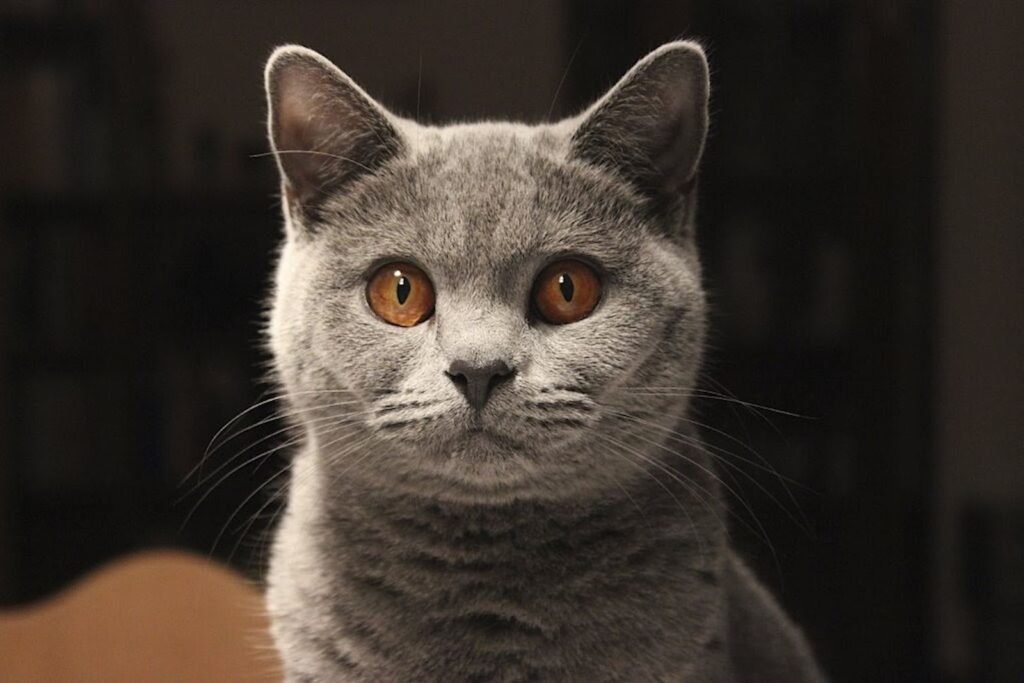
The British Shorthair price in the USA for a pet-quality kitten from a reputable, health-testing breeder is usually $1,200 to $2,500 in 2026, according to Petful’s 2026 price guide, while adoption through a rescue or shelter usually costs $75 to $200. Show-quality kittens from champion lines run $2,500 to $3,500, and rare colours such as golden or chocolate can reach $3,000 to $5,500. But the kitten price is only the start: the first year, purchase included, typically totals $2,500 to $4,500, and the yearly cost after that runs about $1,270 to $2,605, because a British Shorthair is a large, slow-maturing cat that lives a long time and eats like it means it.

British Shorthair price at a glance (2026)
| What you are paying for | Typical range (2026) |
|---|---|
| Breeder kitten, pet quality | $1,200–$2,500 |
| Breeder kitten, wider reputable range | $1,100–$4,000 |
| Breeder kitten, show quality | $2,500–$3,500 |
| Rare colours (golden, chocolate, lilac, colorpoint) | $3,000–$5,500 |
| Top-tier catteries, breeding rights | $5,000–$8,000+ |
| Adoption, rescue or shelter | $75–$200 |
| First year, purchase included | $2,500–$4,500 |
| Yearly cost after year one | $1,270–$2,605 |
| Lifetime cost (12–20 years) | $15,000–$30,000+ |
Sources disagree more on this breed than on most, because they measure different markets. Petful’s 2026 guide puts a pet-quality kitten at $1,200 to $2,500 and show quality at $2,500 to $3,500, with rare colours to $5,500. Furriq, working from named US catteries with published prices, puts the pet range wider at $1,100 to $4,000, with the middle of the market around $2,400 and top tiers past $8,000. GoodCattery puts pet quality higher still at $1,800 to $3,500. The honest planning range is therefore about $1,200 to $3,500 for a pet kitten from a health-tested cattery — and anything under $1,100 should be treated as a warning sign, not a bargain, according to both Furriq and GoodCattery.
What moves the price: colour, quality and testing
Colour is the biggest single price variable. The classic British Blue — solid blue-grey with copper or amber eyes — sits at the low end of the range because it is the most common colour and the one most buyers picture. Golden British Shorthairs, with their warm apricot undercoat, darker tipping and green or blue-green eyes, are the most expensive colour variety: Petful puts goldens at $1,800 to $5,500 from a health-tested breeder, and GoodCattery at $3,000 to $5,500. Lilac, chocolate and colorpoint coats also carry premiums, often $2,500 to $4,500.
Quality tier is the second driver. A pet-quality kitten is sold on a spay or neuter contract with limited registration and is not intended for showing or breeding. Show quality runs $2,500 to $3,500 by Petful’s measure, or $4,000 to $7,500 by GoodCattery’s. A registered kitten comes with TICA or CFA papers, a health guarantee, vaccinations, deworming and a microchip.
Health testing is the biggest legitimate reason for a higher price. Responsible breeders screen their breeding cats for hypertrophic cardiomyopathy (HCM) and polycystic kidney disease (PKD), and run comprehensive genetic panels at $200 to $400 per cat, plus an annual cardiac echocardiogram at $250 to $400, according to GoodCattery. A breeder who cannot show you the parents’ test results is not a cheaper option — they are an untested one.
Adoption: the cheapest way to get a British Shorthair
Adopting a British Shorthair usually costs $75 to $200 through a rescue or shelter, according to Petful, and $100 to $200 according to BubblyPet — and the fee usually covers spay or neuter, vaccinations and a microchip. Most rescue British Shorthairs are adults rather than kittens, and many are mixes — fine if you want the look and temperament rather than the papers.
The first year: what it really costs
A British Shorthair’s first year costs about $2,500 to $4,500 with a breeder kitten, according to Petful — purchase plus setup — while GoodCattery puts it higher at $3,500 to $6,500, and Blue Brits Cattery, a high-end Houston cattery, at about $5,560 to $7,820. The spread reflects the kitten price more than anything else.
| First-year item | Typical cost |
|---|---|
| Kitten from a breeder (or adoption fee) | $1,200–$2,500 ($75–$200 rescue) |
| First vet visits + kitten vaccine series | $150–$350 |
| Spay or neuter | $50–$250 (low-cost clinic) to $300+ (private vet) |
| Carrier, litter boxes, cat tree, bowls, bed | $200–$700 |
| Food, litter and supplies, first year | $400–$800 |
| First-year total, breeder kitten | $2,500–$4,500 |
The vaccine series is a real line item: our guide to cat vaccination cost puts the full kitten series at $150 to $350 across two to three visits. A routine vet visit cost is about $150 to $225 a year. Breeders usually place kittens at 12 to 16 weeks — a kitten offered at 8 weeks has been placed too early.
British Shorthair price per month — and why weight sets it
After the first year, a British Shorthair costs about $1,270 to $2,605 a year, according to BubblyPet, or roughly $105 to $215 a month — inside the $85 to $205 a month our guide to the cost of owning a cat gives for an ordinary indoor cat, but at the top end of it, because this is a big, food-motivated breed.
| Recurring cost | Monthly | Basis |
|---|---|---|
| Food (quality dry + wet) | $40–$70 | A large cat eats more |
| Litter | $15–$30 | Standard for an indoor cat |
| Routine vet care, saved monthly | $15–$30 | Exam, boosters, bloodwork |
| Pet insurance | $30–$40 | NAPHIA cat average, about $435 a year |
| Grooming tools, treats, toys | $15–$35 | Brushes, toys, scratching posts |
| Total per month | $105–$215 | BubblyPet annual range |
The monthly table is compiled from BubblyPet’s annual range and NAPHIA’s insurance figure; the total is the sourced number. The lifetime figure follows from the lifespan: 12 to 20 years at $1,270 to $2,605 a year puts lifetime care, before the kitten price, at roughly $15,000 to $30,000 or more.
How long do British Shorthairs live?
The honest answer is a spread, not a single number. The Cat Fanciers’ Association puts the range at 14 to 20 years, according to RealPetAge, and PetGuides at 12 to 20 years. Blue Brits Cattery gives 12 to 18 years, with well-cared-for indoor cats from health-tested parents commonly reaching their late teens, and PetsVines gives 12 to 17 years. A 2024 UK VetCompass study of life tables (Teng et al., Journal of Feline Medicine and Surgery) put life expectancy at birth at 9.58 years — much lower, because life expectancy at birth counts kittens and young cats that die early and includes cats with outdoor access, while an indoor British Shorthair that reaches five in good health has far better odds.
Health watch-points that change the real cost
The breed’s health problems should be budgeted for from day one — and the heart matters most.
- Hypertrophic cardiomyopathy (HCM). The most significant hereditary health concern in the breed, and the leading cause of premature death. HCM thickens the heart muscle, reducing its efficiency, and can cause heart failure or sudden death, often with little warning. Granstrom et al. (2011) screened 329 British Shorthairs in Denmark and found 8.5% were HCM-positive — but the sex difference was dramatic: 20% of males against 2.3% of females. There is no DNA test for HCM in British Shorthairs: Raffle et al. (2025) confirmed the genetics are breed-specific, so the tests sold for it look for Maine Coon and Ragdoll mutations and do not apply here. Annual echocardiographic screening by a board-certified veterinary cardiologist is the only defence, and a clear scan only shows how the heart looked on the day.
- Polycystic kidney disease (PKD). An inherited condition in which fluid-filled cysts form on the kidneys and gradually reduce their function. It entered the breed through post-war Persian outcrosses — the same disease our guide to the persian cat price warns about. Unlike HCM, PKD has a DNA test: a clear result stands for life. Prevalence has fallen from 0.99% in 2019 to 0.71% in 2022 thanks to screening programmes, according to Shitamori et al. (2023).
- Obesity. The breed’s most common and most preventable problem. British Shorthairs are calm, food-motivated and slow-moving, and Koh et al. (2023) studied 2,540 British Shorthairs in Australia and found 48% of adults were overweight or obese. An overweight British Shorthair typically loses 2 to 4 years off its expected lifespan, according to Blue Brits Cattery. Measured meals and a body condition score of 4 to 5 out of 9 are the defence.
- Dental disease. Williams et al. (2024) found British Shorthairs have a 15.5% periodontal disease prevalence — the third highest of any cat breed — because the brachycephalic skull crowds the teeth. Regular dental checks matter more here than in most breeds.
See a vet now if… your British Shorthair is breathing fast or with its mouth open, has suddenly gone lame in a back leg or is crying in pain, has collapsed, or has stopped eating and is drinking far more than usual. This is general information only, not a substitute for veterinary advice. Contact a vet or emergency clinic immediately.
Temperament and grooming: what daily life is like
A British Shorthair is the sturdy, round-faced, plush-coated “teddy bear” cat from the United Kingdom — and its defining trait is temperament, not looks. This is a calm, dignified, undemonstrative cat that loves its family on its own terms and is genuinely content alone for the workday, which is why it suits owners who work full-time better than a Siamese does. Males weigh 12 to 17 pounds and females 7 to 12 pounds, according to Petful, and the breed matures slowly, often not fully grown until 3 to 5 years old.

The coat is short, dense and plush, and needs less work than a Persian’s or a Maine Coon’s: weekly brushing is usually enough, daily during the spring and autumn shedding seasons. British Shorthairs are not lap cats in the usual sense — they sit beside you rather than on you — and they are famously good with children and with other pets, provided the introductions are calm.
Is a British Shorthair right for you?
Choose a British Shorthair if you want a large, calm, independent family cat, you can budget $105 to $215 a month plus a real emergency reserve, and you will buy only from a breeder who shows you HCM screening and PKD DNA results for both parents — or adopt from a rescue. Look elsewhere if you want a cat that follows you from room to room.
FAQ
How much is a British Shorthair?
A pet-quality kitten usually costs $1,200 to $2,500 in 2026, or $1,100 to $4,000 across named US catteries. Show quality starts around $2,500. Adoption is typically $75 to $200.
How much do British Shorthair kittens cost?
Most cost $1,200 to $2,500 in 2026, depending on colour, pedigree and region. Golden and other rare colours cost $3,000 to $5,500.
How much does a British Shorthair cost per month?
About $105 to $215 a month after the first year (BubblyPet’s annual range of $1,270 to $2,605) — mostly food and vet care for a large cat.
How long do British Shorthairs live?
Usually 12 to 20 years, according to the Cat Fanciers’ Association and PetGuides, with many reaching their mid-to-late teens. A UK VetCompass study put life expectancy at birth lower, at 9.58 years.
Are British Shorthairs good family cats?
Yes — calm, gentle and famously good with children and other pets, and content alone during the workday. They sit beside you rather than on you.
What health problems do British Shorthairs have?
HCM is the biggest risk, followed by PKD, obesity and dental disease. Ask to see HCM screening and PKD DNA results for both parents before you pay a deposit.
Sources
- Petful, “British Shorthair Price: Full Cost Guide for 2026” — pet-quality kitten $1,200–$2,500; show quality $2,500–$3,500; rare colours $3,000–$5,500; adoption $75–$200; first year $2,500–$4,500; males 12–17 lb, females 7–12 lb.
- Furriq, “British Shorthair Price 2026: $1,100-$4,000 Kitten Cost” — pet kitten $1,100–$4,000 from named US catteries, middle of the market around $2,400; show quality $2,800–$3,500; top tiers $8,000+; adoption $75–$200.
- GoodCattery, “British Shorthair Kitten Price Guide 2026: What to Expect” — pet quality $1,800–$3,500; show quality $4,000–$7,500; goldens $3,000–$5,500; genetic panels $200–$400 per cat, cardiac echo $250–$400; first year $3,500–$6,500; annual $1,200–$1,800.
- Blue Brits Cattery, “British Shorthair Kitten Cost: 2026 USA Price Guide” — $3,950–$6,000 from a reputable health-tested breeder; show quality $5,000–$8,000+; first year about $5,560–$7,820; lifespan 12–18 years; overweight cats lose 2–4 years.
- SmartLoanTips, “British Shorthair Kittens for Sale: A 2026 Guide to Prices, Breeders and Care” — reputable-breeder prices about $900–$4,000; pet quality $1,200–$2,500; show quality $2,500–$3,500.
- BubblyPet, “How Much Does a British Shorthair Cost? (2026 Price Guide)” — average $1,500–$2,400; show $2,200–$3,000; adoption $100–$200; annual $1,270–$2,605.
- PetsVines, “British Shorthair Cat: Complete Breed Guide and Price 2026” — lifespan 12–17 years; breeder $1,200–$2,000 pet quality, $2,000–$3,000+ show; rescue $100–$400.
- RealPetAge, “British Shorthair Lifespan: 12–20 Years Indoors” — CFA range 14–20 years; Teng et al. (2024) UK VetCompass life expectancy at birth 9.58 years; Granstrom et al. (2011) HCM 8.5% of 329 Danish British Shorthairs, 20% of males vs 2.3% of females; Koh et al. (2023) 48% of 2,540 Australian adults overweight or obese; Williams et al. (2024) periodontal disease 15.5%.
- BritishShorthairCat.co.uk, “British Shorthair Lifespan and Health: The Complete Owner’s Guide” — lifespan typically 14–20 years; no DNA test for HCM in British Shorthairs; PKD DNA test available, clear result stands for life; GCCF requires a negative PKD test for the active register since 1 March 2025.
- PetGuides, “British Shorthair cat care guide (Australia)” — lifespan 12–20 years; weekly brushing; obesity, dental disease, HCM and PKD as the common health issues.
- NAPHIA, 2026 State of the Industry — via Article 15 — accident-and-illness premiums about $836 a year for a dog and $435 a year for a cat.
Last reviewed: 15 November 2026. This article is general information only and is not a substitute for veterinary advice.