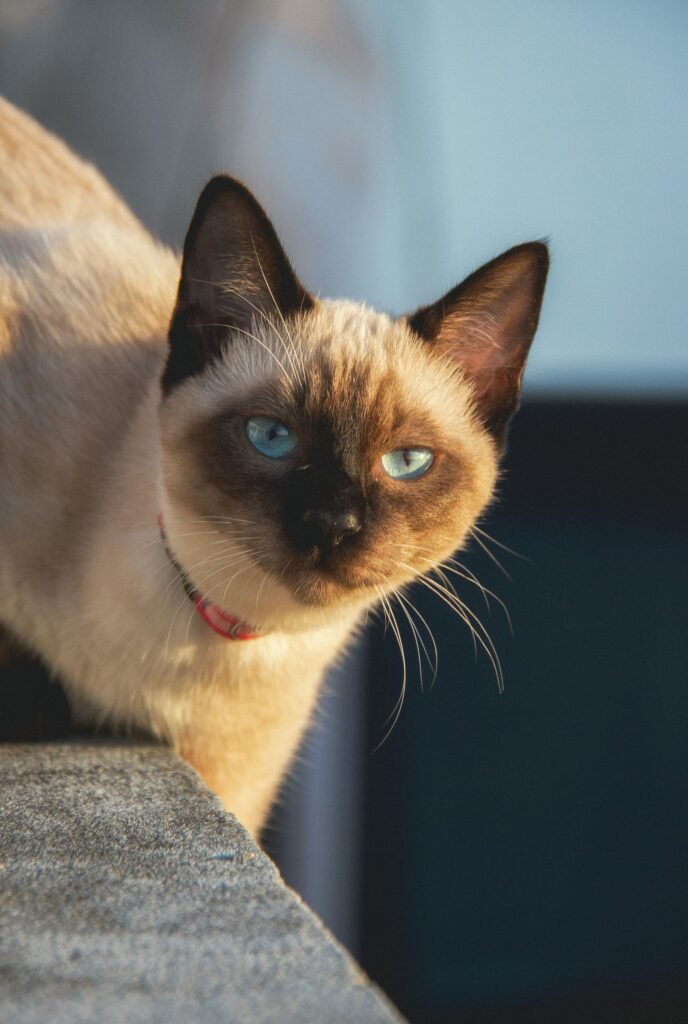
The Siamese cat price in the USA for a pet-quality kitten from a reputable, registered breeder is usually $400 to $1,000 in 2026, according to Petful’s 2026 price guide, while adoption through a rescue or shelter usually costs $100 to $300. Show-quality kittens from titled lines run $1,200 to $2,500, and rare point colours such as flame point and lynx point can reach $1,500 to $3,000. But the kitten price is the smallest part of the story: the first year, purchase included, typically totals $1,705 to $4,460, and the yearly cost after that runs about $700 to $1,800 — because a Siamese is one of the longest-lived cat breeds, and it will talk to you for every one of those years.

Siamese cat price at a glance (2026)
| What you are paying for | Typical range (2026) |
|---|---|
| Breeder kitten, pet quality | $400–$1,000 |
| Breeder kitten, wider registered range | $1,000–$2,500 |
| Breeder kitten, named catteries (flat pricing) | $1,000–$3,500 |
| Breeder kitten, show quality | $1,200–$2,500 |
| Rare point colours (flame, lynx, lilac) | $1,500–$3,000 |
| Adoption, rescue or shelter | $100–$300 |
| First year, purchase included | $1,705–$4,460 |
| Yearly cost after year one | $700–$1,800 |
| Lifetime cost (12–20 years) | $10,000–$25,000+ |
Sources disagree more on this breed than on most, because they measure different markets. Petful’s 2026 guide puts a pet-quality kitten at $400 to $1,000 and show quality at $1,200 to $2,500, with adoption at $100 to $300. SmartLoanTips puts pet quality higher at $1,000 to $2,500, with show quality at $2,500 to $4,000 or more. Furriq, working from named US catteries with published prices, found flat pricing is the custom: Rosebuds Siamese in Indiana charges a flat $1,000, Sunshine Cattery a flat $1,500, and Blue Eyes Cattery in Maryland $3,500 all-inclusive. The honest planning range is therefore about $400 to $2,500 for a pet kitten from a registered breeder — and anything below $500 is almost always unregistered or unvaccinated, according to Furriq.
What moves the price: points, quality and flat pricing
Point colour is the biggest price driver. The four traditional points — seal, chocolate, blue and lilac — are generally in the same price range. The premiums sit with the rarer patterns: flame point (also called red point) and lynx point (tabby-patterned points) command the steepest premiums, at $1,500 to $3,000 according to Petful, because the tabby pattern depends on the right genetics and is in high demand. A genuine premium reflects pedigree documentation, CFA or TICA registration and screened parents, not just an unusual coat.
Quality tier is the second driver. A pet-quality kitten is sold on a spay or neuter contract with limited registration and is not intended for showing or breeding. Show-quality kittens from titled lines run $1,200 to $2,500 by Petful’s measure, or $2,500 to $4,000 or more by SmartLoanTips’ — the gap reflects how different sources define show potential. A registered kitten comes with CFA or TICA papers, a health guarantee, vaccinations and a microchip.
Flat pricing is the breed’s custom. Unlike most breeds, Siamese catteries in the US mostly do not tier their prices: one price for the litter, whatever the kitten looks like. That is why the same breed can be quoted at $400 to $1,000 in one guide and $1,000 to $3,500 in another — they are describing different catteries, not different cats. What the price includes matters as much as the number: the $1,000 cattery is not including a spay, while the $3,500 cattery is, plus registration, a health guarantee and a year of support, according to Furriq.
Adoption: the cheapest way to get a Siamese
Adopting a Siamese usually costs $100 to $300 through a rescue or shelter, according to Petful, and $15 to $400 according to SmartLoanTips — and the fee usually covers spay or neuter, vaccinations and a microchip. Siamese cats and mixes reach shelters more often than most purebreds, so adoption is a real option here: set a weekly alert on Petfinder and check breed-specific rescues, because kittens are adopted fast.
The first year: what it really costs
A Siamese kitten’s first year costs about $1,705 to $4,460 with a breeder kitten, according to Petful — purchase plus setup — while SmartLoanTips puts it at $2,300 to $3,000 for veterinary care, food and necessary equipment. The spread reflects the kitten price more than anything else.
| First-year item | Typical cost |
|---|---|
| Kitten from a breeder (or adoption fee) | $400–$1,000 ($100–$300 rescue) |
| First vet visits + kitten vaccine series | $150–$350 |
| Spay or neuter | $50–$250 (low-cost clinic) to $300+ (private vet) |
| Carrier, litter boxes, cat tree, bowls, bed | $300–$600 |
| Food, litter and supplies, first year | $400–$700 |
| First-year total, breeder kitten | $1,705–$4,460 |
The vaccine series is a real line item: our guide to cat vaccination cost puts the full kitten series at $150 to $350 across two to three visits. A routine vet visit cost is about $150 to $225 a year. Breeders usually place kittens at 12 to 16 weeks — a kitten offered at 8 weeks has been placed too early. Siamese kittens are born almost completely white, and their points darken over the first months as the temperature-sensitive gene does its work.
Siamese cat price per month — and why this breed is cheap to feed
After the first year, a Siamese costs about $700 to $1,800 a year, according to Petful, or roughly $60 to $150 a month — below the $85 to $205 a month our guide to the cost of owning a cat gives for an ordinary indoor cat, because a Siamese is a small, slender cat that eats less. EatHealthy365 puts the monthly budget at $75 to $150, and the annual total at $1,360 to $2,720, which sits inside the same range.
| Recurring cost | Monthly | Basis |
|---|---|---|
| Food (quality dry + wet) | $25–$50 | A small, slender cat eats less |
| Litter | $15–$30 | Standard for an indoor cat |
| Routine vet care, saved monthly | $15–$25 | Exam, boosters, bloodwork |
| Pet insurance | $30–$40 | NAPHIA cat average, about $435 a year |
| Grooming tools, treats, toys | $10–$25 | Brush, toys, puzzle feeders |
| Total per month | $60–$150 | Petful annual range |
The monthly table is compiled from Petful’s annual range and NAPHIA’s insurance figure; the total is the sourced number. The lifetime figure follows from the lifespan: 12 to 20 years at $700 to $1,800 a year puts lifetime care, before the kitten price, at roughly $10,000 to $25,000 or more — the cheapest lifetime bill of any breed profile on this site so far, because the cat is small and the yearly cost is low.
How long do Siamese cats live?
The honest answer is a spread, not a single number. Petful puts the typical range at 15 to 20 years, with many living into their early 20s, and PetMD gives an average of 15 years, known to live well into their 20s. The GCCF, the main UK cat registry, gives 10 to 15 years, the PDSA 11 to 15 years and VCA 12 to 15 years. A 2024 UK VetCompass study of life tables (Teng et al., Journal of Feline Medicine and Surgery) put life expectancy at birth at 11.7 years — the same as the average cat — because life expectancy at birth counts kittens and young cats that die early, while a Siamese that reaches five in good health has far better odds. An earlier VetCompass study put the breed’s median lifespan at about 14 years.
Health watch-points that change the real cost
The breed’s health problems should be budgeted for from day one — and the eyes and the lungs matter most. For comparison, our guide to the persian cat price covers a breed with a very different health profile, where the coat and the kidneys set the bill.
- Progressive retinal atrophy (PRA-rdAc). An inherited breakdown of the retina that slowly leads to blindness. A DNA test is available, and responsible breeders should screen for it: Menotti-Raymond et al. (2010) found that about a third of the gene copies tested in Siamese from North America and Europe carried the responsible mutation.
- Amyloidosis. The most serious breed-specific concern: abnormal amyloid protein deposits in the organs, mainly the liver in Siamese, which can lead to liver failure or internal bleeding. It has a documented familial predisposition in Siamese lines, can affect cats as young as one to four years old, and there is no cure — management focuses on slowing progression. There is no DNA test, so the breeder’s line history is the screen.
- Asthma and bronchial disease. Siamese cats have a higher-than-average predisposition to feline asthma, a chronic inflammatory condition of the lower airways. Symptoms include coughing, wheezing and laboured breathing — and a cough that looks like a hairball attempt with nothing produced needs a vet, not a wait-and-see. Inhaled steroids manage most cases for years, according to PawFigures.
- Dental disease. A significant ongoing concern, given the breed’s documented predisposition to periodontal disease. Daily tooth brushing from kittenhood genuinely matters here, more than in most breeds.
- Other conditions the GCCF lists for the breed: mediastinal lymphoma and intestinal tumours, a tendency to vomit, hip dysplasia, pica, and rare inherited storage diseases. Hypertrophic cardiomyopathy (HCM) is also documented in the breed. Siamese cats are also more sensitive to anaesthesia than most breeds, which is worth telling any vet before a procedure.
See a vet now if… your Siamese is struggling to breathe, breathing with its mouth open, coughing repeatedly with nothing produced, has collapsed, or has suddenly gone lame in a back leg or is crying in pain. This is general information only, not a substitute for veterinary advice. Contact a vet or emergency clinic immediately.
Temperament and grooming: what daily life is like
A Siamese is the opposite of a British Shorthair: where the British Shorthair is content alone for the workday, a Siamese is a loud, loyal roommate who opens cupboards and expects a full report on your day. They are one of the most intelligent and most vocal cat breeds — they do not just meow, they yowl, chatter and demand a conversation — and they are famously needy, choosing one person and making it obvious. They weigh only 5 to 8 pounds, according to VCA, with a sleek, slender body, a wedge-shaped head, large ears and deep blue almond-shaped eyes.
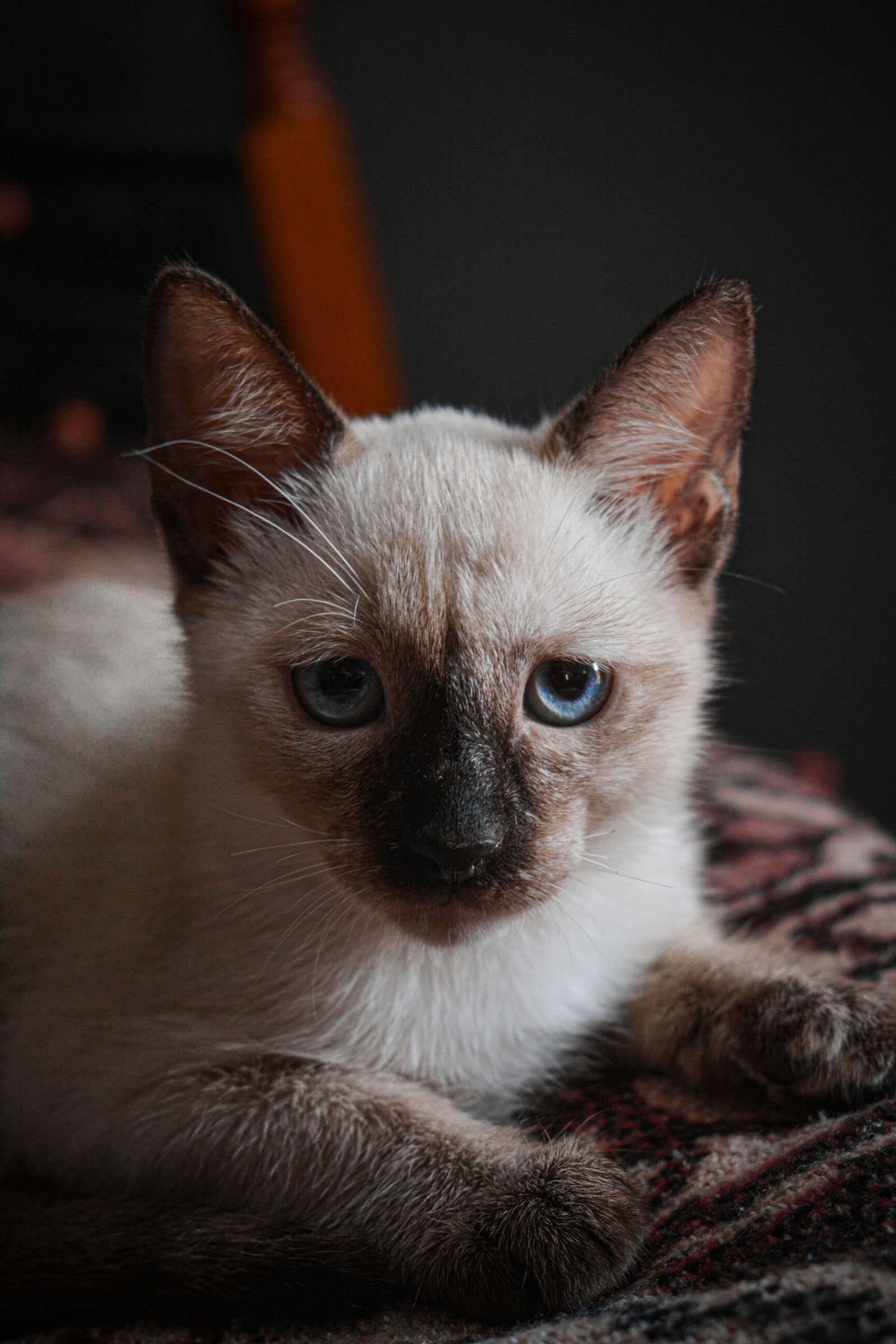
The coat is short and fine and needs almost no grooming: a weekly brush is plenty. What the breed needs instead is company and play — puzzle feeders, climbing shelves and daily interactive play — and a second cat is often the honest answer for owners who work full-time, though it is not automatic. Siamese cats are also one of the few breeds that sometimes like water. They are the oldest recognised cat breed with roots in ancient Siam, now Thailand, where they were temple cats and companions to royalty.
Is a Siamese right for you?
Choose a Siamese if you want a small, affectionate, talkative companion, you are home most of the day or can get a second cat, and you will buy only from a breeder who shows you PRA DNA results and a clean line history for amyloidosis — or adopt from a rescue. Look elsewhere if you want a quiet cat, or a cat that is happy alone: this breed’s voice is its defining trait, and it does not come with a mute button.
FAQ
How much is a Siamese cat?
A pet-quality kitten usually costs $400 to $1,000 in 2026, or $1,000 to $2,500 from a registered breeder. Show quality starts around $1,200. Adoption is typically $100 to $300.
How much do Siamese kittens cost?
Most cost $400 to $2,500 in 2026, depending on quality, pedigree, point colour and region. Named catteries often charge a flat $1,000 to $3,500.
How much does a Siamese cat cost per month?
About $60 to $150 a month after the first year (Petful’s annual range of $700 to $1,800) — mostly food and routine vet care for a small cat.
How long do Siamese cats live?
Usually 15 to 20 years, according to Petful and PetMD, with many living into their early 20s. A UK VetCompass study put life expectancy at birth lower, at 11.7 years.
Are Siamese cats good family cats?
Yes — affectionate, intelligent and famously good with children who respect them. They are very vocal and very needy, and they do best in homes where someone is around most of the day.
What health problems do Siamese cats have?
PRA is the biggest testable risk, followed by amyloidosis, asthma and dental disease. Ask to see PRA DNA results for both parents and ask about amyloidosis in the line before you pay a deposit.
Sources
- Petful, “Siamese Cat Price: How Much Does a Siamese Cat Cost?” — pet-quality kitten $400–$1,000; show quality $1,200–$2,500; rare colours $1,500–$3,000; adoption $100–$300; first year $1,705–$4,460; annual $700–$1,800.
- Furriq, “Siamese Cat Price 2026: $1,000-$3,500 Kitten Cost Guide” — pet kitten $1,000–$3,500 from named US catteries (Rosebuds $1,000 flat, Sunshine $1,500 flat, Blue Eyes $3,500 all-inclusive, TiaMaria $1,400–$1,800); rescue $300–$400.
- SmartLoanTips, “Siamese Kittens for Sale: A Guide to Market Realities and Ethical Acquisition” — pet-quality kitten $1,000–$2,500; show quality $2,500–$4,000+; adoption $15–$400; first year $2,300–$3,000.
- Catster, “Siamese Kittens for Sale: 2026 Breeders List in the US” — kitten $500–$2,800; purebreds often $1,200 or more for show purposes.
- TheIdealCat, “How Much Is a Siamese Cat Worth? Price Guide 2026” — breeder kitten $250–$1,000, show quality $1,500–$2,500; adoption $50–$200; monthly $50–$100.
- FelineNest, “Siamese Cat Price: The Shocking 2026 USA Cost Guide” — pet quality $400–$1,000; show quality $1,500–$2,500+; adoption $225–$450; median $1,950 from a TICA-registered breeder.
- EatHealthy365, “The Average Cost of a Siamese Kitten in 2026” — breeder $800–$2,500+; adoption $150–$400; monthly $75–$150; annual $1,360–$2,720; lifespan 15–20 years.
- Petful, “Siamese Cat Breed Guide: Personality, Colors, Price & Care” — lifespan 15–20 years; asthma, HCM and amyloidosis as the main health concerns; adoption $75–$200; pet quality $600–$1,200.
- PetMD, “Siamese Cat Breed Health and Care” — average lifespan 15 years, known to live well into their 20s; asthma and amyloidosis described; PRA genetic tests available.
- PawFigures, “Siamese Cat Lifespan: How Long Do Siamese Cats Live?” — typical lifespan 12–20 years; UK VetCompass life expectancy at birth 11.7 years (Teng et al., 2024); asthma, amyloidosis and lymphoma as the main early-death causes.
- Katdootje, “Siamese Cat Breed: Personality, Colours, Lifespan, Care” — GCCF lifespan 10–15 years; PRA-rdAc DNA test, about a third of gene copies tested carried the mutation (Menotti-Raymond et al., 2010); amyloidosis, asthma, mediastinal lymphoma and intestinal tumours listed.
- CatBasket, “Siamese Cat UK: Temperament, Health and Care” — life expectancy about 12 years at birth in UK vet records; earlier VetCompass study median about 14 years; GCCF health list.
- NAPHIA, 2026 State of the Industry — via Article 15 — accident-and-illness premiums about $836 a year for a dog and $435 a year for a cat.
Last reviewed: 15 November 2026. This article is general information only and is not a substitute for veterinary advice.